
Locate the change in the process
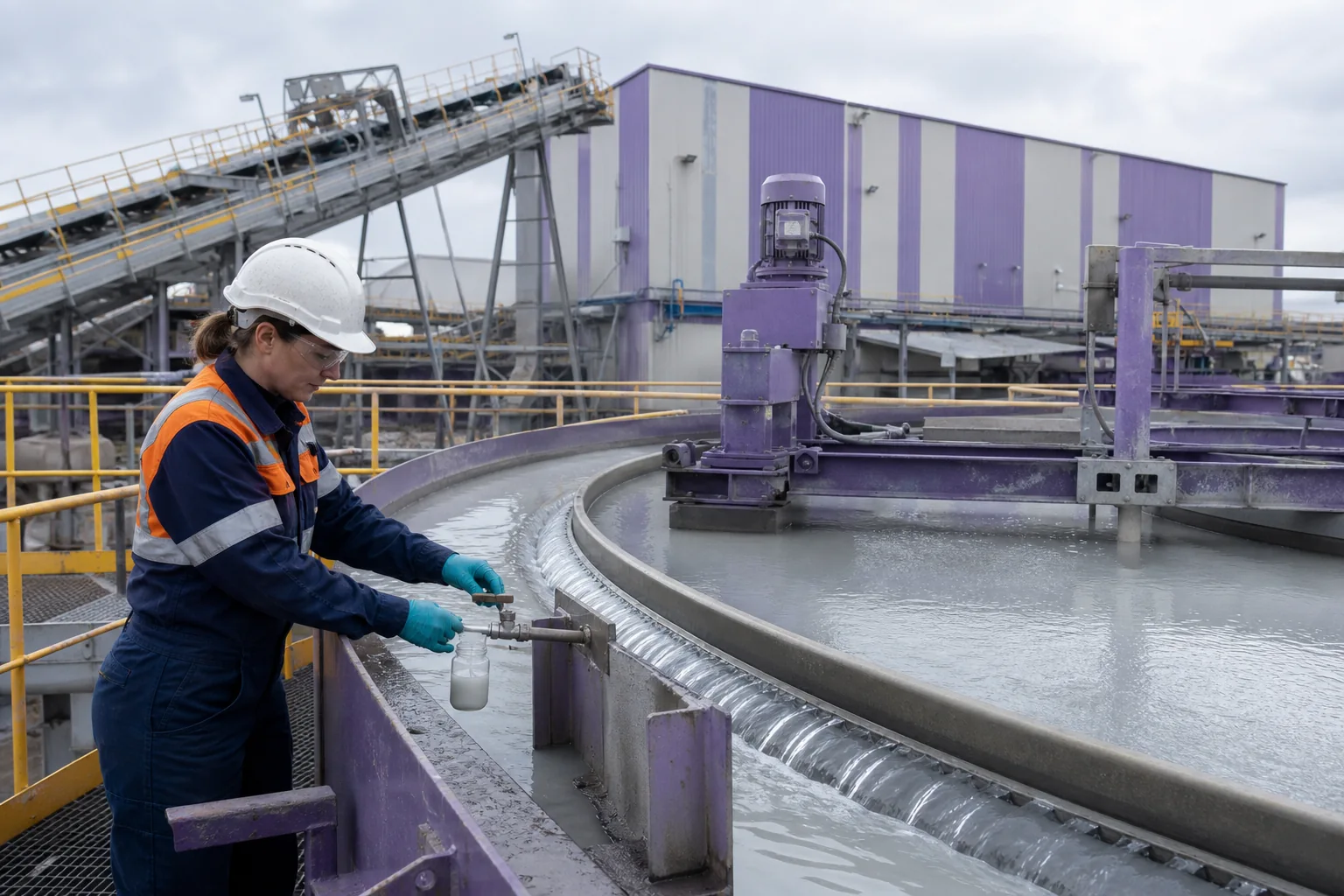
Record where the floc first appears acceptable and where the result becomes unsatisfactory. Include addition location, mixing stage, pumps, pipe route and separator. Observe under a reasonably stable feed rather than comparing unrelated operating periods.
Sampling itself can disturb the material. Keep collection and observation methods consistent and document limitations. A visual difference is useful evidence, but it should be connected with clarified-liquid quality, capture or another defined endpoint.
Separate transfer from preparation problems
Verify that consistent prepared solution is reaching the injection point. Intermittent delivery or incompletely prepared stock can resemble a changing shear response. Check actual delivery and preparation conditions before diagnosing the polymer structure.
The preparation check and grade selection criteria address different parts of the investigation. Do not change both without recording what each change is intended to test.
Evaluate the proposed adjustment safely
Discuss injection and transfer changes with the responsible process team. Define a bounded comparison that changes one relevant condition where operationally feasible. Keep feed and separator settings in the record.
Do not assume all broken floc will reform adequately, or that increasing dose must compensate for the transfer stage. Confirm the final separator result for each proposed adjustment. A change that improves appearance but worsens liquid quality or handling is not a complete improvement.
Use the result to refine the sample request
Return the before-and-after observations, operating conditions and product code to technical sales. Explain whether the primary problem is floc survival, capture, settling or downstream handling. That evidence can justify another candidate or a different preparation and injection review.
For mineral circuits, connect the findings with the mineral-washing endpoint. Keep a complete trial record so the commercial decision reflects the actual transfer route.
Carry the operating evidence into the purchase
When the observed condition affects a supply decision, compare Nonionic Polyacrylamide for Sand Washing: Sample-to-Order Checks, Nonionic Polyacrylamide for Coal Washing: Supplier Trial Requirements, Buying Nonionic Polyacrylamide for a Tailings Thickener, Nonionic Polyacrylamide for Filter Presses: What to Test Before Buying. Retain the identified sample and the measured operating condition with the quotation so the approved material can be traced into the commercial order.