
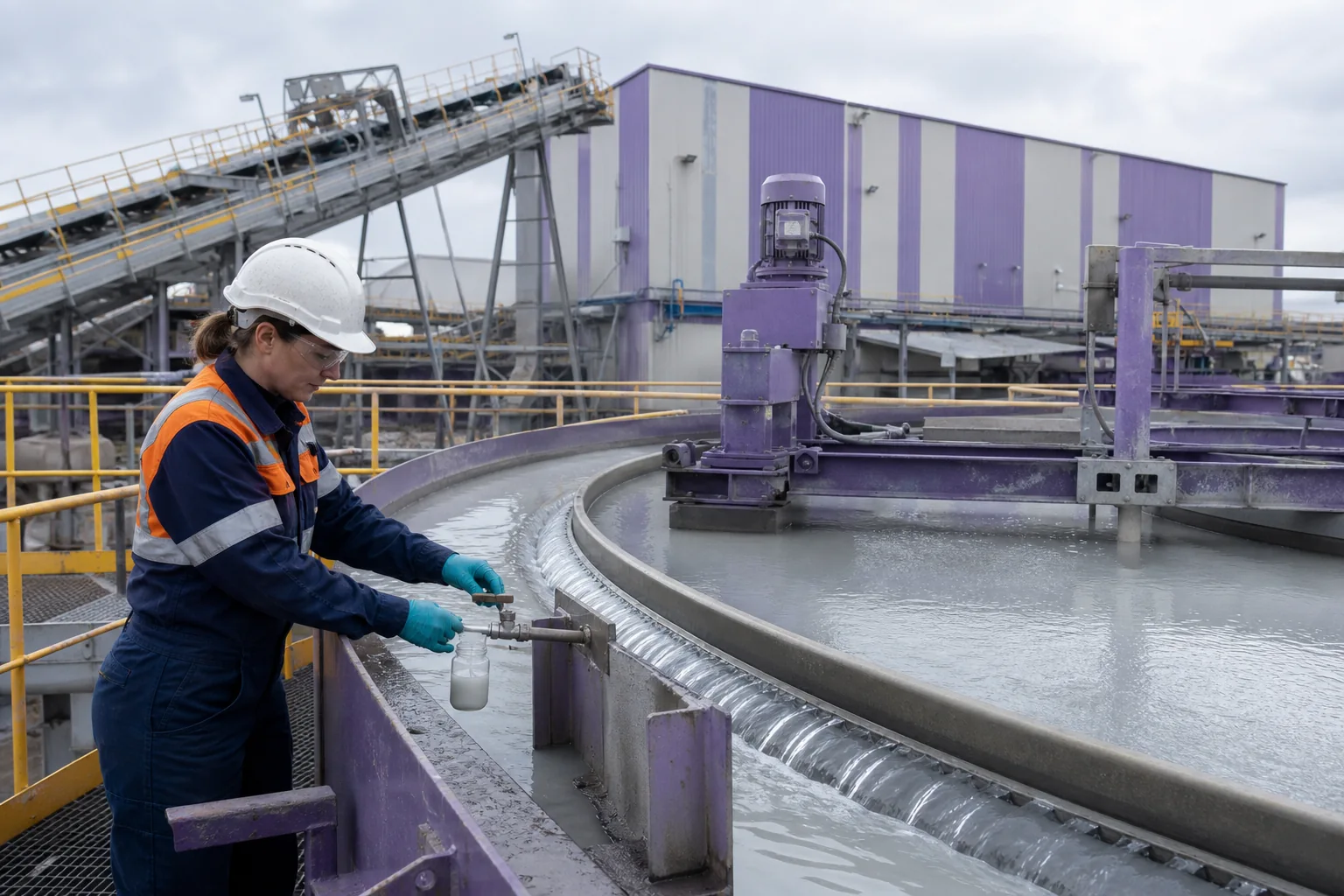
Collect representative wash water
Record the material being washed, the collection location and whether the sample includes normal fines. A clear side stream or a diluted sample can give a misleading picture of the main circuit. Identify the reused water fraction and any upstream additions.
Compare samples while their condition is representative. If storage or transport changes the suspension, describe that limitation in the test record instead of treating it as a normal plant result.
Keep the comparison controlled
Use a preparation method confirmed for each proposed candidate, then compare at documented dose levels. Preserve the same feed volume, mixing sequence and observation times across the screening set.
Measure clarified-liquid quality alongside interface movement. Look at bed behavior and the handling requirement of the next operation. A large loose floc can look favorable during settlement without producing the desired downstream performance.
Follow the actual return-water constraint
If the overflow is reused, define what the receiving process needs. Avoid assuming that clearer water in a vessel establishes compatibility for every downstream operation. Where relevant, request review by the responsible process team.
The transfer-shear check is useful when a candidate settles well near the dosing point but disappoints after pumping or transport.
Make the sample request specific
Describe the feed, preparation water, current polymer, separator and required improvement. Ask why the proposed nonionic grade is being compared with any alternatives. Include the test quantities and eventual supply destination.
Connect grade selection with a controlled trial. Record unresolved questions before committing to a commercial replacement.
Resolve the purchase requirements
Use Nonionic Polyacrylamide for Sand Washing: Sample-to-Order Checks, Nonionic Polyacrylamide for Coal Washing: Supplier Trial Requirements, Buying Nonionic Polyacrylamide for a Tailings Thickener to connect the process requirement with the proposed supply. Confirm the product code and unresolved acceptance questions before committing to the order.