
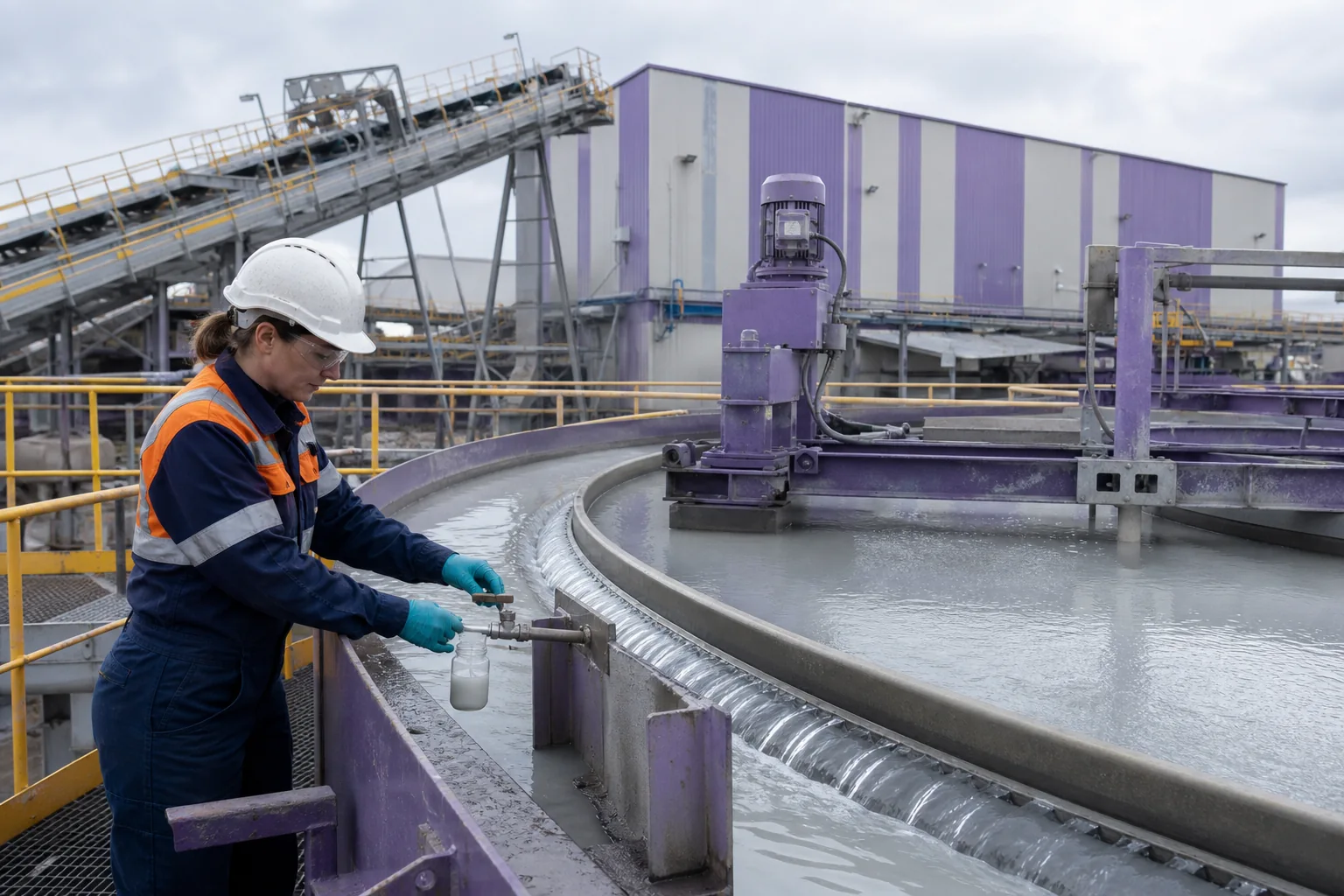
Mineral washing and fine-particle separation
A mineral suspension may include a changing mixture of fine particles and reused process water. Ask whether the treatment objective is reusable overflow, better solids capture, acceptable underflow handling or a combination.
The mineral-washing route connects those objectives with a representative trial. Nonionic polymer is a screening candidate, not a guaranteed winner over anionic or other justified alternatives.
Industrial treatment after upstream conditioning
Describe the complete treatment train, including pH adjustment or coagulant addition where present. A polymer result cannot be interpreted reliably if upstream conditions change without being recorded.
The industrial separation route evaluates the actual precipitated or suspended material. Do not infer broad suitability from low pH or from the NPAM label alone.
Check preparation water separately
Water used to prepare stock is not necessarily the same as the water in the suspension. Changes in either can influence the comparison. Keep both samples identified, especially when assessing recycled plant water.
Use the make-down water comparison to isolate a preparation question before replacing an otherwise promising grade.
Specify the result and the limitation
Report feed origin, solids, water condition, current treatment, addition sequence and separator. Include any restriction on preparation capacity or transfer. Ask for candidates that can be tested under those conditions.
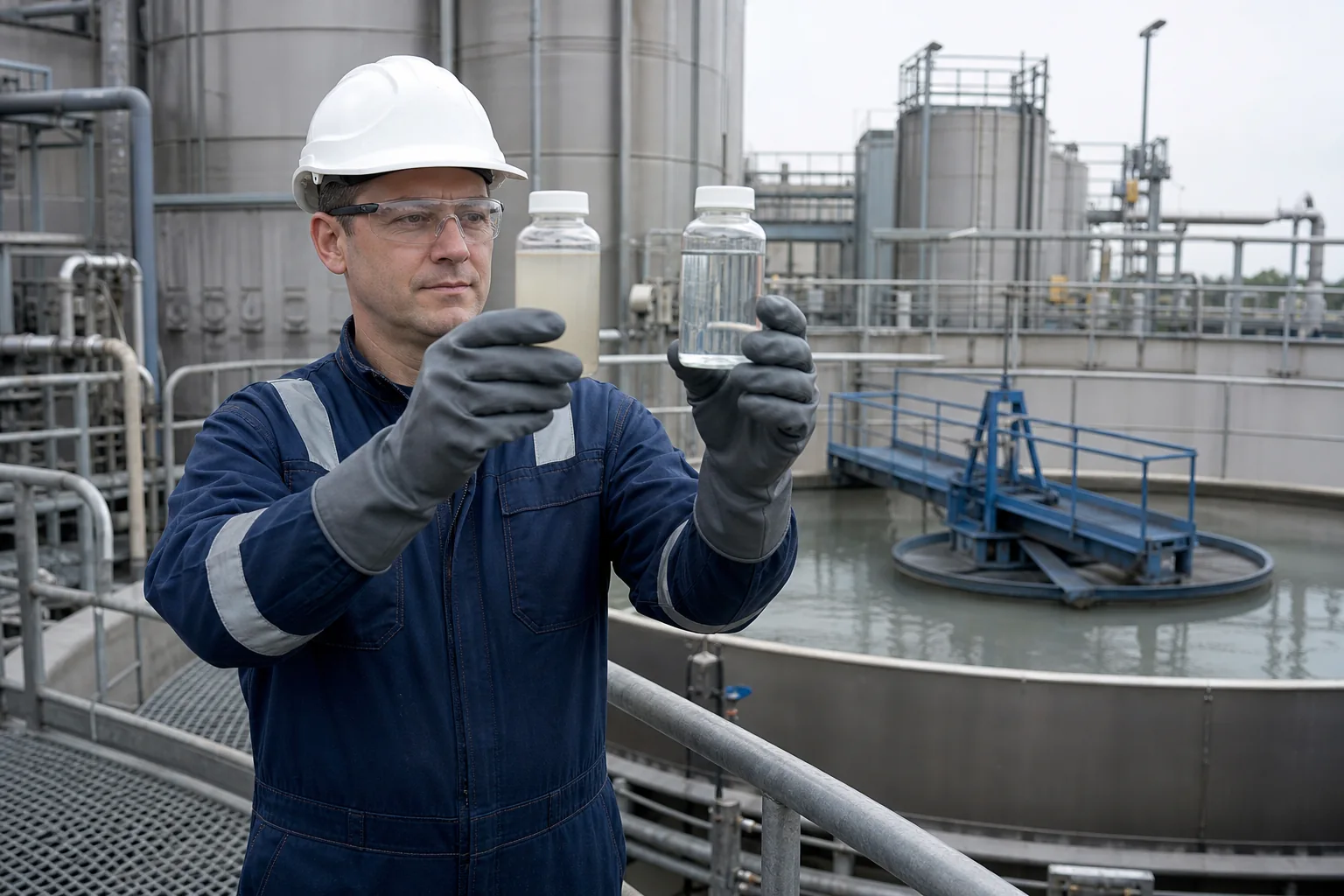
Retain measurable endpoints and a stopping rule in the trial plan. Avoid declaring success from a single attractive beaker.
Resolve the purchase requirements
Use Nonionic Polyacrylamide for Sand Washing: Sample-to-Order Checks, Nonionic Polyacrylamide for Filter Presses: What to Test Before Buying to connect the process requirement with the proposed supply. Confirm the product code and unresolved acceptance questions before committing to the order.