
Define the nonionic specification
Confirm how the supplier describes the proposed material’s ionic character and relevant release tests. The commercial term nonionic should not be treated as a promise that chemistry, pH or dissolved salts will have no effect on preparation or treatment.
State any particular process-compatibility requirement in the enquiry. If the product is being screened alongside anionic or cationic alternatives, document the reason for that comparison rather than choosing from names alone.
Compare molecular claims on a common basis
Ask whether molecular weight is measured, estimated or a grade descriptor, and request the method when that value matters to procurement. Viscosity data require their own test conditions. Numbers from different methods cannot establish equivalence by themselves.
The viscosity and molecular-weight discussion separates useful documentation from unsupported performance assumptions. A practical sample comparison remains necessary even when two documents look similar.
Rank useful operating outcomes
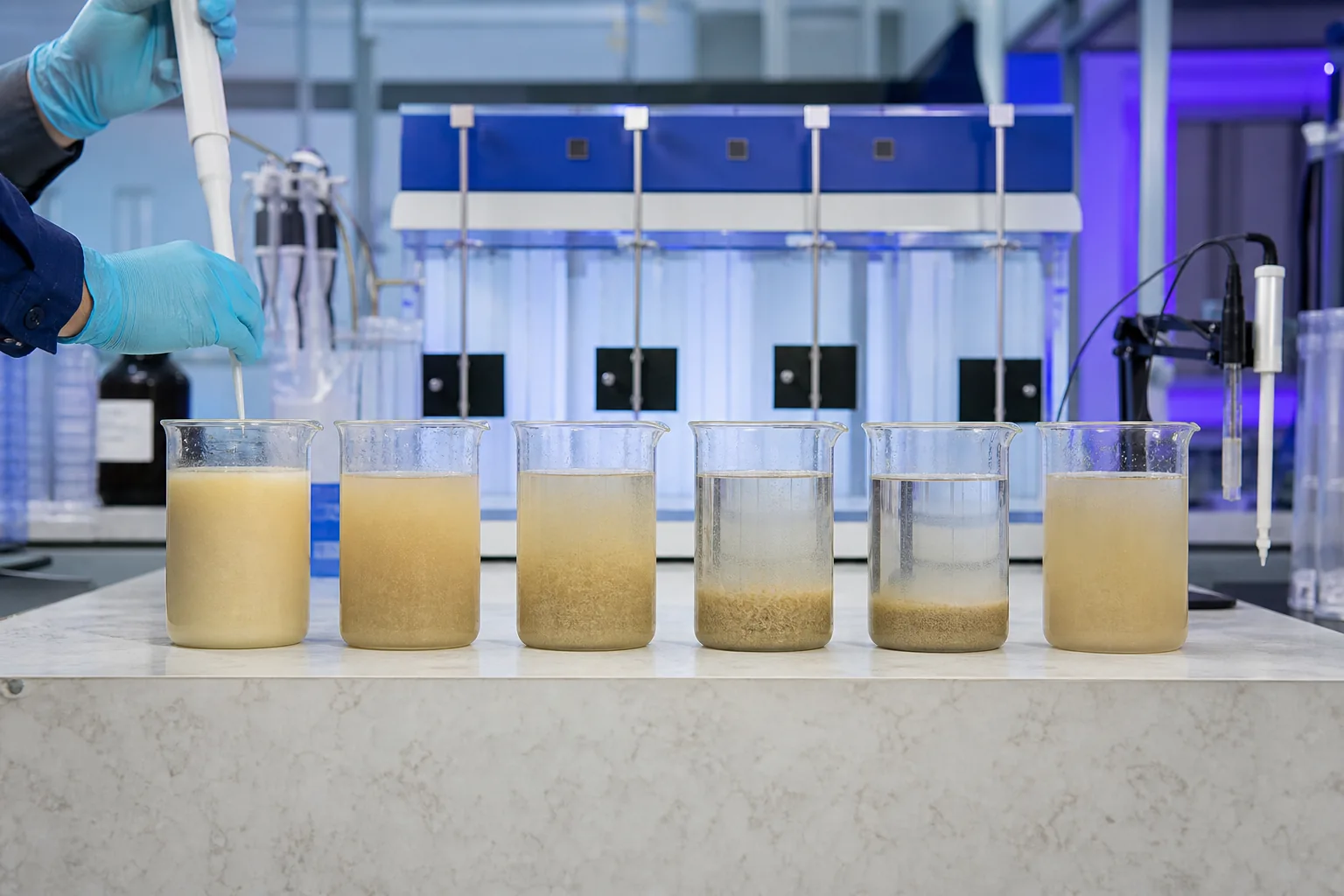
Choose the endpoint before looking at floc size. Faster settlement with unacceptable overflow, or larger floc that fails after transfer, may be a poor choice. Identify the constraint of the actual separator and keep a current-product or untreated control.
Repeat the comparison on credible feed variation when possible. A grade that works only at a narrowly controlled laboratory condition may require more plant evidence than one with a usable operating range.
Carry approval into supply
Keep sample identity, preparation method, feed description and measured results with the proposed product code. State which evidence is still pending before a full order. Specify the commercial documents and any required change notification.
Connect trial planning with quality and supply checks. Request technical clarification when a proposed replacement changes the grade or preparation instructions.
Resolve the purchase requirements
Use Ordering Nonionic Polyacrylamide Samples Before a Bulk Purchase, Replacing an NPAM Grade: How to Qualify an Alternative Supplier, Nonionic Polyacrylamide Residual Acrylamide: Documents to Request to connect the process requirement with the proposed supply. Confirm the product code and unresolved acceptance questions before committing to the order.