
State the intended use and requirement
Identify the application and the requirement your purchasing or technical team needs to verify. Ask the supplier for information about the exact proposed grade, not a broad statement covering every polyacrylamide. Do not infer a product purity or residual-monomer value from a family-level CAS description.
If the application has special approval requirements, obtain a responsible specialist review for that use and destination. No generic NPAM catalogue description establishes authorization for drinking water, food contact or another restricted use.
Ask what the reported result represents
Request the analytical method, reporting units and whether the value is a typical figure, a release limit or a measured batch result. Identify the product code and document revision. For a result reported below a method limit, retain the stated reporting basis rather than treating it as an exact zero.
Distinguish the polymer product from residual acrylamide. Avoid rewriting a material description as a promise that the residual constituent is absent unless supported evidence establishes the specific statement being made.
Use each document for its purpose
An SDS supports hazard communication and handling, while a technical sheet may describe product characteristics. A COA should identify what was tested for a stated batch. One document does not automatically supply every required acceptance result.
Use the batch-document review to check traceability. If a critical result is not on the standard certificate, ask what order-specific evidence can be supplied before accepting the quotation.
Resolve the gap before commercial approval
List missing methods, limits or application evidence explicitly. Do not replace unavailable data with an assumption derived from another supplier or a similar product code. Agree the acceptance requirement and supporting documents in writing.
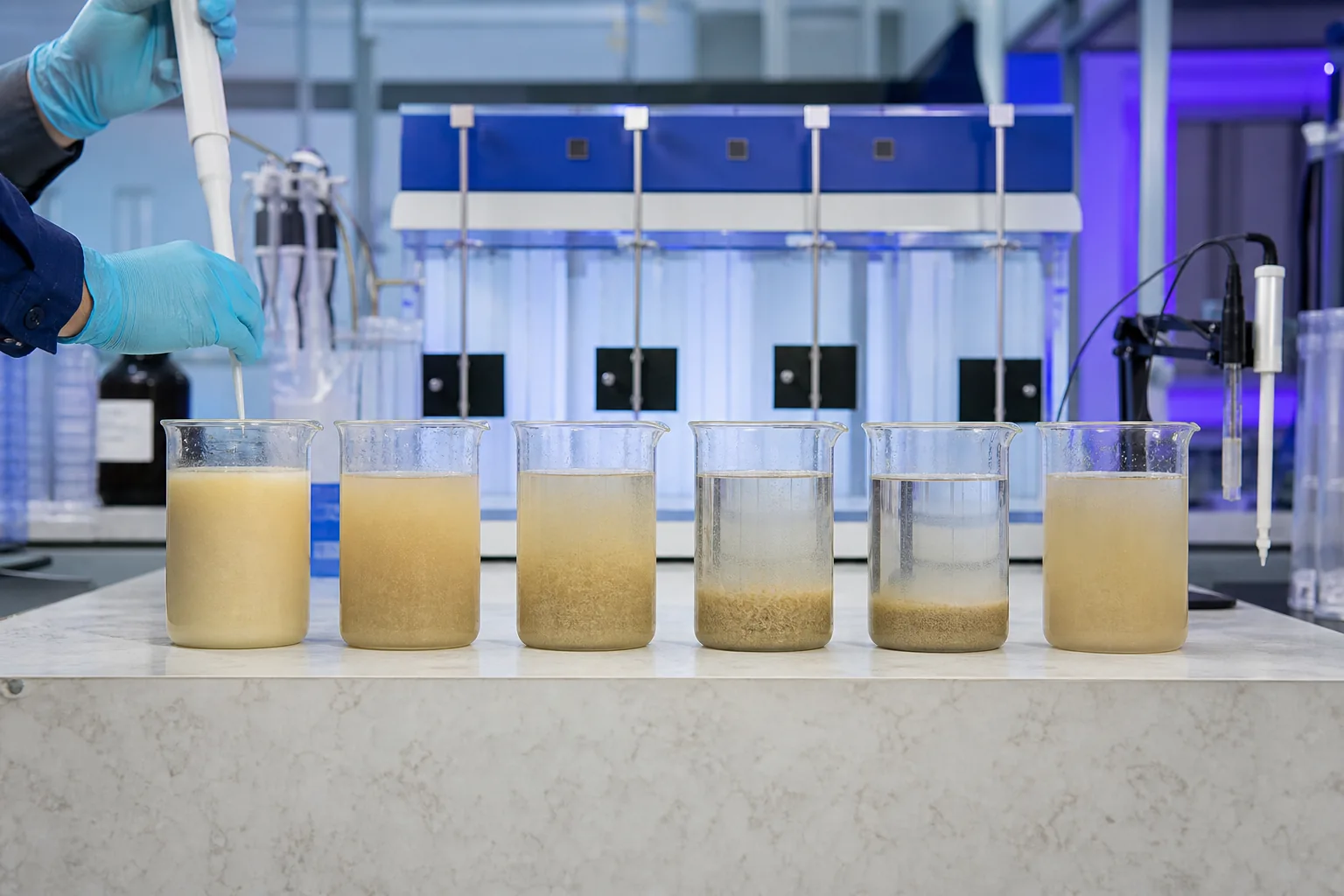
Keep the final decision with the purchase specification. If the evidence remains insufficient for the intended use, hold that application approval rather than treating a successful flocculation test as proof of compliance.
Decision record for the quotation
| Decision | Evidence needed |
|---|---|
| Scope | Exact grade and intended application identify which evidence is needed. |
| Result basis | Method, units and typical-versus-batch status are retained without converting a reporting limit into zero. |
| Decision | Unresolved acceptance evidence is closed before approval for the stated use. |